Steel, Wood, and Twenty Winters: Choosing a Deck Frame That Actually Lasts
Here's a shift most homeowners never notice. Walk a deck job today, ask the builder what's under the boards, and more and more of them will tell you steel. Not because it's the trendy answer. Because they've watched what happens to wood, and they've decided they're done fighting it.
The switch is already underway
Steel framing used to be a commercial-only story. That's changed. The steel market is projected to grow from roughly $17 billion in 2025 to more than $28 billion by 2033, and a real piece of that is happening in residential exterior work like decks. The reason is simple economics. People are spending more on premium deck surfaces than ever, and it stops making sense to put a 25-year composite board on a frame that starts declining in year three.
Fire season raised the stakes
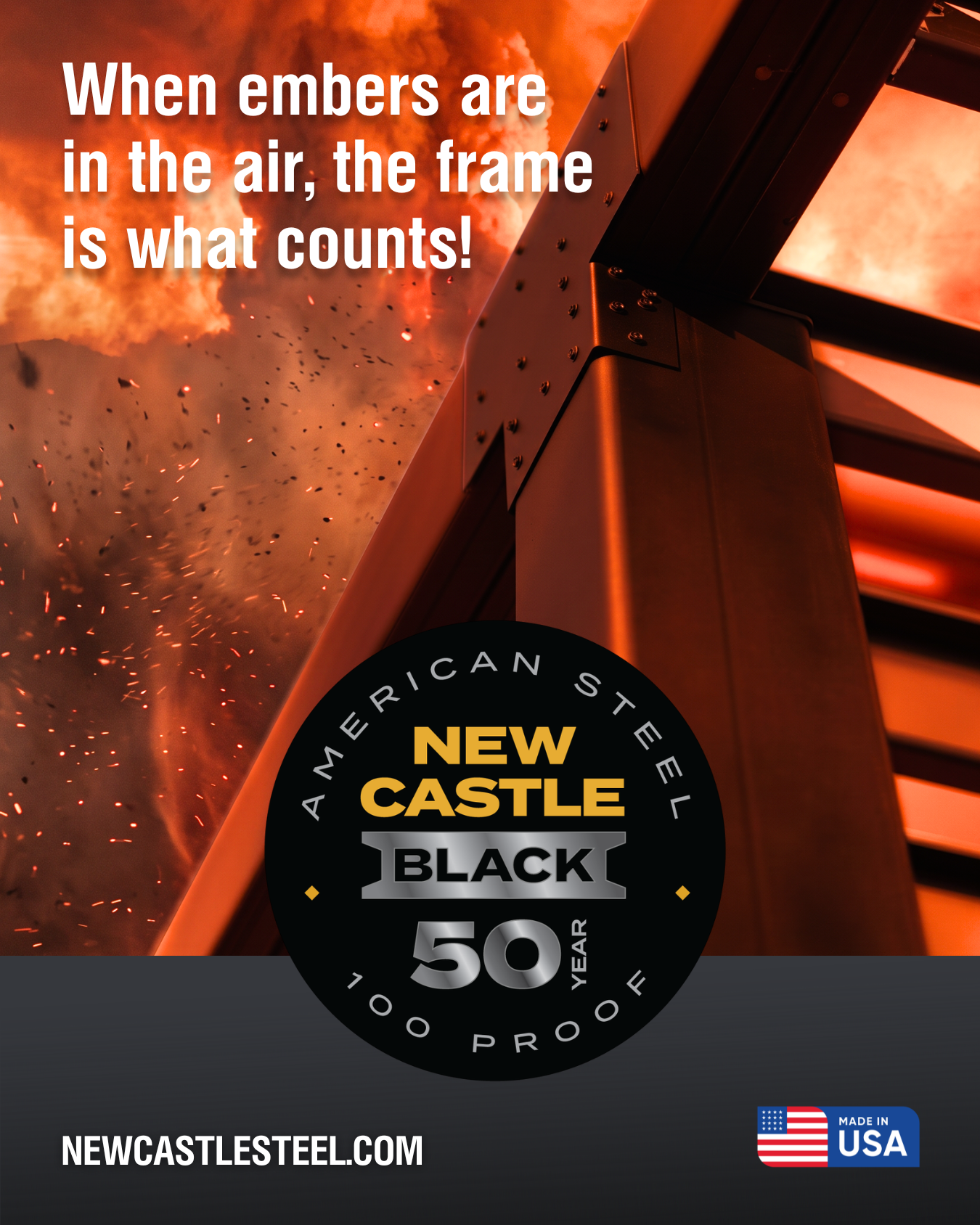
There's a harder reason steel keeps coming up. Fire seasons are getting worse. According to the National Interagency Fire Center, of the ten years with the most acreage burned, every single one has happened since 2004. When wind-blown embers land on a structure, wood framing can catch and even help carry a fire, pressure treatment or not.
Steel doesn't do that. It's non-combustible. New Castle Steel framing carries a Class 1A fire rating, the highest available, and it holds that rating for the life of the deck without any retreatment. It won't ignite, won't add fuel, and won't give off toxic smoke when it's exposed to heat. Wood's fire protection fades over time. Steel's is the same on day one and in year thirty.
Twenty winters is the real test
Fire is the dramatic risk. The quiet one is time. Every season a wood frame takes on moisture, then dries out, then takes on more. That constant swelling and shrinking is what causes the squeaks, the sagging, and the fasteners that slowly back their way loose. Winter is the worst of it. Freeze-thaw cycles, snow load, and standing moisture are exactly the conditions wood handles poorly, and they come around every single year.
Steel doesn't move the way wood does. Triple-coated galvanized steel stays dimensionally stable through heat, cold, and rain, and it resists the corrosion that eventually gets to lesser materials. You build it, and it holds its shape through the hard months, so spring shows up and the deck is right where you left it.
A deck is only as good as its weakest layer
This is the part good builders understand instinctively. If you're installing a premium composite surface designed to outlast wood by decades, the substructure underneath should be built to match. Pairing a long-life board with a frame that fails first is a mismatch your client will feel long after the job is done, and it's the kind of thing that turns a proud project into a callback.
What to ask before you build
Whether you're a builder specing your next job or a homeowner planning one, a few questions cut through the noise. How long is the surface warrantied, and does the frame match it? Is the framing rated for exterior use? What does it do in a fire, and what does it do over twenty winters? New Castle Steel framing is code-listed for exterior use and backed by a 50-year limited residential warranty, made with 25% recycled American steel, and fully recyclable at the end of its long life.
You won't see the frame once the deck is finished. But it's the part that decides how the rest of the story goes. That's why more builders are starting there, and why it's worth starting there too.